
The spongy moth (formerly known as “gypsy moth”) is an invasive species known to completely strip infested trees and shrubs of their leaves, potentially killing them. Last year, Wisconsin experienced its worst spongy moth outbreak in over a decade, exacerbated by 2023’s drought conditions. According to an update released by the DNR earlier this month, the outbreak seems to be slowing down a bit in 2024, with high caterpillar mortality and less intense defoliation observed in southern Wisconsin.
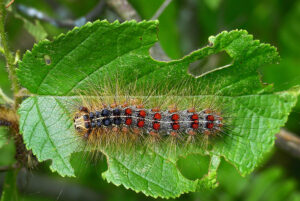
Many caterpillars have been killed by a virus called NPV or a fungus that is thriving in this year’s wet conditions. Communities and local environmental groups have also contributed to spongy moth decline through targeted action.
The City of Madison, for example, has distributed free burlap to residents and conducted several spraying and injection operations. The Urban Tree Alliance documented a severe infestation on significant old-growth trees on the grounds of the Mendota Mental Health Institute, including several Heritage Oaks. They were able to treat 39 trees with pesticide injections thanks to funding from the Bock Foundation.
Given the high caterpillar mortality observed this year, the DNR predicts that the outbreak will be greatly reduced next year. Municipal staff and property owners can help amplify this downward trend by taking a few key actions. Resources available from CARPC and our partners, including the Wisconsin Department of Natural Resources (DNR) and UW-Madison Division of Extension, include:
- CARPC’s Spongy Moth Outbreak Map – This map, which was created by Matt Krempely, enables community members and planning professionals to see the distribution of spongy moth outbreaks across the region. Anyone can add new locations with just a simple click. You may also report sightings to the WI DNR Spongy Moth Hotline at (800) 642-MOTH (6684) or email spongymoth@wisconsin.gov.
- UW-Madison Division of Extension’s Management Guide for Homeowners – Extension’s management guide educates homeowners and community members on the spongy moth’s life cycle and outlines steps people can take at different times of the year to minimize the outbreak.
- Spongy Moth Resource Center – This website includes FAQs, information on treatment options, and tips for locating spongy moths.