This is the second installment in a three-part series by CARPC Senior Environmental Planner Matt Noone. Be sure to read the first installment if you haven’t already!
The Landscape of Dane County, Wisconsin
When I moved to Madison in 2013, my first professional role was in the Forest Ecology and Management Department (now Forest & Wildlife Ecology) at the University of Wisconsin–Madison, where I worked in the Forest Landscape Ecology Lab. Through this experience, I gained a deep appreciation for Wisconsin’s landscape and a strong foundation in historical ecology.
I managed a computer mapping lab that converted a 1930s forest inventory into a digital Geographic Information System (GIS). This historical dataset came from the Wisconsin Land Economic Inventory—also known as the Bordner Survey, named after its director, John Bordner. Conducted during a period of peak land clearing and environmental degradation, the survey is likely the most detailed land-use inventory ever carried out in Wisconsin.

In 2019, I took on a new role as a GIS Specialist at the Capital Area Regional Planning Commission, a public agency focused on land use and natural systems protection in Dane County. Even after changing roles, I maintained my connection to the Bordner Survey digitization project. The effort was completed in 2023—it took 10 years and contributions from more than 200 students.
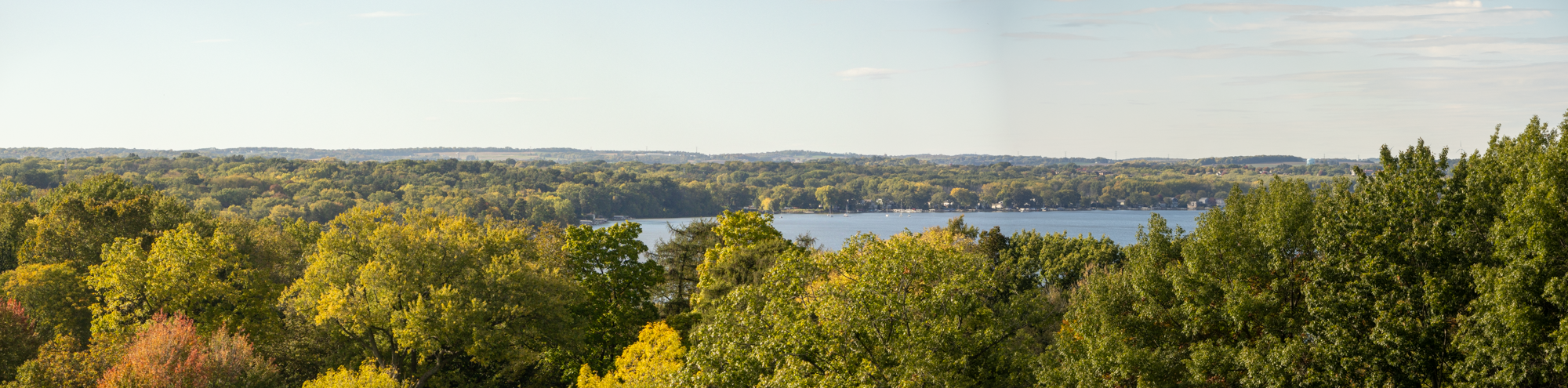
It was through my work with the Bordner Survey data that I learned to give the oak genus the respect it so rightfully deserves. At the time of European American settlement in the 1830s, Dane County’s landscape was shaped by bur oak (Quercus macrocarpa) and white oak (Quercus alba) savanna and oak woodland, interwoven with open prairies. These oak savannas were majestic—populated with prairie grasses and forbs, and by widely spaced oaks whose crowns could stretch up to 100 feet across. The oaks were often broader than they were tall; just five mature bur oaks, carefully spaced, could blanket a single acre with canopy.
Tree densities across the county were typically fewer than 20 trees per acre, creating open, light-filled landscapes. In this setting, oaks functioned as a keystone ecological species, on which hundreds of other species depended. Historically, mesic tree species—such as sugar maple, boxelder, hackberry, basswood, and elm—were also present, although they were narrowly confined to riparian areas where waterways offered some protection from wildfire.
All Wisconsin oak species have intermediate to low shade tolerance, meaning they thrive and regenerate only when light competition from adjacent vegetation and trees is eliminated. For thousands of years, frequent fires maintained by Indigenous peoples limited competing vegetation and allowed oaks to dominate the landscape. When European American settlers removed fire from the landscape, tree densities increased and shade-tolerant mesic species gained an advantage. As a result, oak regeneration declined, leaving only pre-settlement specimens to remind us of the landscape once known in southern Wisconsin.
As these living relics from an earlier time gradually fade—lost to age, development, and competition for light—we now know that we need to actively manage our landscape to retain the oak savannah of centuries past. Today, these remnant oaks, many of them living artifacts from the pre-settlement era, depend on active management as shade-tolerant species outcompete them for sunlight, a shift that has unfolded over just a few human generations. This transitional ecological process has been underway for more than 150 years in southern Wisconsin. Without active landscape management, these remnant oaks, many of them living artifacts from the pre-settlement era, will continue to be outcompeted and ultimately lost from our landscape.
Interestingly enough, urban environments appear to have provided many relic oaks with a repose, allowing them to exist and thrive on city streets, in parks, and in backyards without the same pressures from agriculture or competing sunlight in the closed forest environment. Of course, these urban oaks face their own challenges, including soil compaction, root damage, and removal during building and infrastructure construction. Even so, in Dane County, the best opportunities to witness these living artifacts often remain in our cities, villages, and parks.