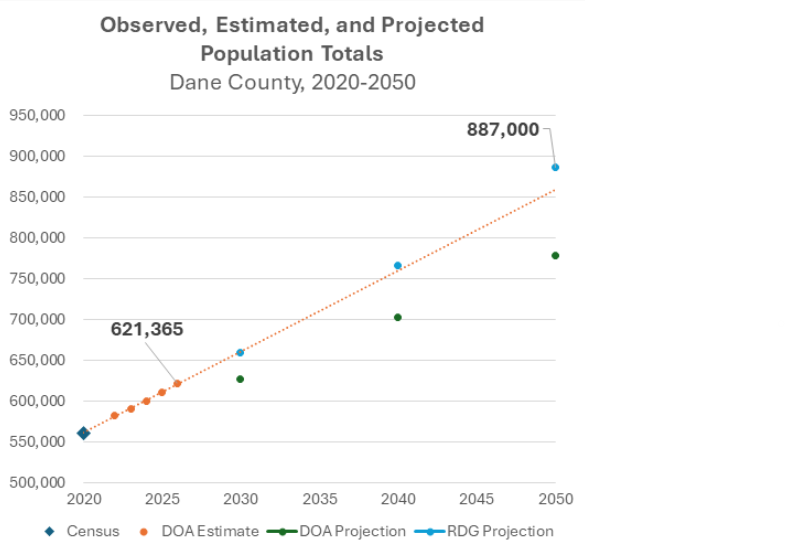
Dane County continues to grow—and it’s setting the pace for Wisconsin. The Wisconsin Department of Administration (DOA) recently released its final population estimates for January 1, 2026, ranking Dane County first among Wisconsin’s 72 counties in both the number of residents added and percentage growth since the 2020 Census. Over that period, the county has added just under 60,000 residents, an average of roughly 10,400 new neighbors per year.
Dane County’s population grew by 10.7%, compared with 2.1% for the other 71 counties combined. Altogether, the county accounted for roughly 35% of Wisconsin’s total population growth.
How Does Dane County Compare?
Dane County added more than four times as many residents as Waukesha County, which ranked second in total population increase. Here’s how the top 10 counties compare:
| Rank | County | January 2026 Population | Population Increase Since 2020 | Percent Increase |
|---|---|---|---|---|
| 1 | Dane | 621,365 | 59,861 | 10.66% |
| 2 | Waukesha | 419,746 | 12,768 | 3.14% |
| 3 | Brown | 280,064 | 11,324 | 4.21% |
| 4 | Outagamie | 198,566 | 7,861 | 4.12% |
| 5 | St. Croix | 100,982 | 7,446 | 7.96% |
| 6 | Eau Claire | 113,075 | 7,365 | 6.97% |
| 7 | Milwaukee | 945,488 | 5,999 | 0.64% |
| 8 | Calumet | 57,243 | 4,801 | 9.15% |
| 9 | La Crosse | 125,072 | 4,288 | 3.55% |
| 10 | Washington | 139,971 | 3,210 | 2.35% |
Source: Wisconsin Department of Administration, Demographic Services Center, final January 2026 county population estimates. Counties are ranked by the number of residents added, not percentage growth.
What’s Driving the Growth?
Population changes in two main ways: natural increase, when births exceed deaths, and net migration, the balance of people moving into and out of an area. Dane County is gaining residents through both, but migration accounts for the largest share.
Since 2020, estimated net migration has added more than 50,000 residents to Dane County—about three and a half times the gain in Waukesha County, which ranked second in Wisconsin for net migration. Migration accounted for approximately 84% of Dane County’s population increase, adding an average of roughly 8,800 residents per year.
Dane County also gained approximately 9,400 residents through natural increase. That was the second-highest total in the state, behind Milwaukee County’s 14,200.
A Different Picture Across Wisconsin
Dane County’s growth stands out against a more uneven statewide picture. Eleven Wisconsin counties had fewer residents in January 2026 than they did at the 2020 Census. And in 53 of the state’s 72 counties, deaths exceeded births over that period—making migration especially important to maintaining or growing their populations.
DOA’s latest population projections also point to the possibility of future population decline statewide and in many counties. Those trends raise questions about how communities will maintain facilities and services as their populations and tax bases change.
Looking Ahead
For Dane County, the question is how quickly growth will continue. While DOA projects steady growth through 2050, local planners and data nerds see the potential for an even faster pace. If recent trends continue, the county’s population could exceed DOA’s projection by around 100,000 residents by 2050.
Planning for that growth means thinking ahead about housing, transportation, community facilities and services. The choices we make today will help the region meet the needs of current residents while making room for new neighbors.